


 Inquiries
Environment
Environment
We promote responsible care.
Responsible care is a voluntary initiative undertaken by companies that handle chemical substances to address environmental, safety, and health concerns.
Our group’s sustainability activities have their roots in responsible care, and we aim to be an industry trusted and valued by society based on those results.
On-site Environmental Facilities
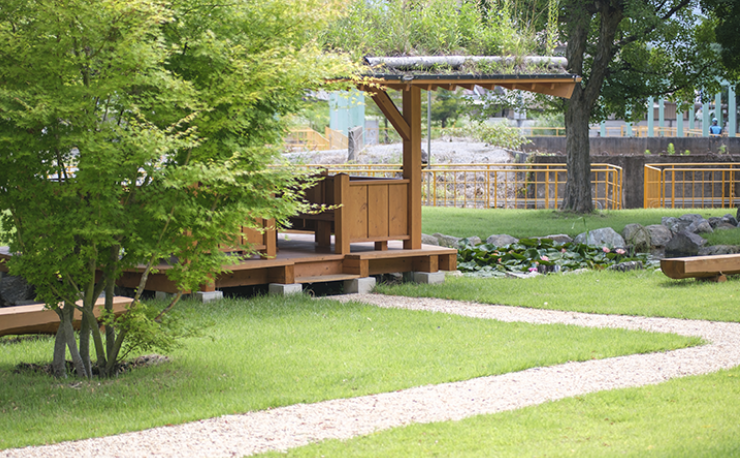
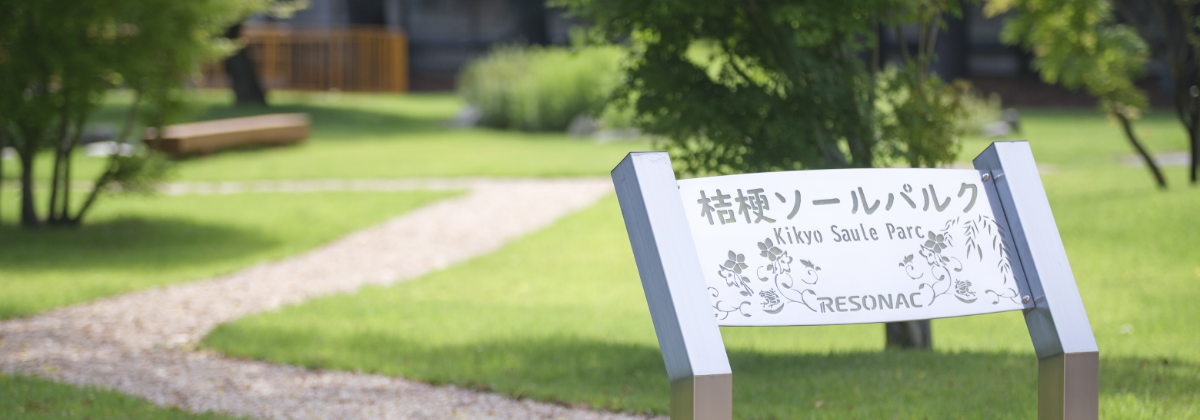
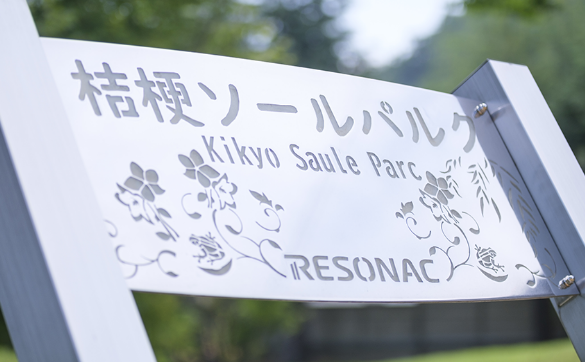
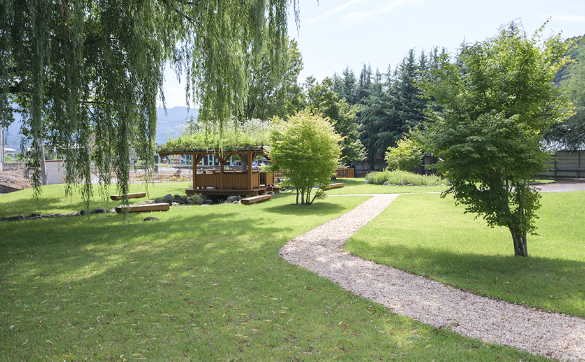
One of the Factory Location Act-prescribed environmental facilities on the east side of the Shiojiri Plant grounds is a bio-park called Kikyo Saule Parc. The name comes from a combination of “kikyo” (bellflower, the flower of Shiojiri City) and the French words “le saule (willow)” and “le parc (park).”
Occupying this park are majestic thousand-year-old willows that have watched over this land since long before the plant came here, and below the trees is a sod-roofed arbor made of Japanese cypress in consideration of the environment, while a brook winds gently around the arbor. Located more than 700 m above sea level, the Shiojiri Plant is the highest elevated in the Resonac Group, and this brook, which feeds into the same Narai River that flows along the Naraijuku post town from the Edo Period, is home to Japanese rice fish and more than a dozen dragonfly and butterfly species that serve as indicator species of water quality, so that even when at the plant, you can enjoy Nagano’s seasonally changing scenery in peace. This place is widely used as somewhere to get in harmony with nature and purify both heart and soul when people want a breather from a hectic work schedule or when they want to come up with some fresh ideas.
Breaking away from the idea that waste is just part of crafting anything, we’re taking a variety of measures not to produce waste through the whole cycle of procurement of raw materials to manufacturing, shipping, and product disposal.
Reduce

Home appliances and composite products made of multiple materials would conventionally become landfill waste, but by manually disassembling and sorting them, they can be transformed from waste into valuable resources.
Reuse

Instead of throwing things away when they’re no longer wanted, we’re seeking new places where they might be put to use both inside and outside the company.
Recycle

We are seeking out partners with the technology to reduce environmental impact, including CO₂ emissions, during the recycling process, and with their cooperation, we strive for more environmentally friendly recycling.
Waste Reduction Measures
The Resonac Group has called for the entire company to reduce the amount of waste generated, declaring a goal of attaining zero emissions(note), and we’re moving forward with measures to exercise the 3 R’s (Reduce, Reuse, and Recycle) with the cooperation of subcontractors.
Furthermore, our responsible personnel visit subcontractors every year to inspect the status of intermediate processing and final disposal and confirm that waste is being processed and disposed of properly.
Note
Zero emissions: a global initiative that aims for the complete elimination of all waste through reuse, rather than focusing on the disposal of produced waste. Proposed by the United Nations University in 1994, the concept seeks to create a resource-circulating society by using resources and energy as efficiently as possible and minimizing environmental emissions to near zero. In the Resonac Group, we define this as “our final landfill disposal volume being below 0.5% of our waste generated.”
Eco-friendly Business Certification
Toyama Prefecture established the “Toyama Prefecture Recycling Certification System” in 2010 with a goal of reducing the volume of waste produced in the prefecture and promoting recycling, and they began certifying recycled products that make use of waste or businesses taking proactive measures to recycle and reduce waste.
The scope of certification covers the three fields of recycled products, eco stations for recovering resources, and eco-friendly businesses, and the Toyama Plant was lauded for its measures to attain zero emissions, collecting and donating aluminum cans and plastic bottle caps, and adopting LED lighting, and was certified as the sixth eco-friendly business in the prefecture in 2013. Certified businesses appear in the prefectural information magazine and on its website, and their initiatives are being widely introduced both inside and outside the prefecture.
Recycling Example
Composite products that combine different materials into a single item, and waste containing a variety of new or recycled materials, are difficult to separate and recycle. In addition, the environment surrounding recycling companies is becoming increasingly strict not only in Japan but also on a global scale, and the responsibility required of waste generators is increasing year by year. By having waste produced at plants thoroughly separated at the plant and with technical assistance from outside businesses, most of this can be widely used in recycled products.
ECO-RC Aggregate
Becomes a base material for asphalt paving
It is used in a firm layer of aggregate under the asphalt so it will be strong enough to sufficiently support cars and large trucks.

Recycled Plastic
Used as material for plastic products
Foreign substances such as metal bits and other materials from molded products are removed, and they are sorted into filmy non-rigid plastic, hard plastics like those used in exterior cladding and containers, and others. After that, they are ground up and given new life as the raw material for recycled plastic.

Recycled PVC
Remolded and used for plumbing, etc.
Since PVC pipe removed from the plant facility includes equipment, metal bolts, and flanges containing core material, these must be removed before the pipes are shredded and regenerated into recycled PVC material. Molded material is used once again as PVC pipe.

Wood Scrap/Wood Pallets
After grinding and sorting, it’s molded for use as raw materials in recycled paper or as heating material
Wood pallets from the plant are ground up as scrap wood, and 20% of the wood fuel chips are reused as paper pulp or reused by fiberboard makers, while the other 80% are sold to companies that need heating material for biomass power generation or have boilers.

Environmental Data
Water Quality Data
We comply with the discharge standards set by the Water Pollution Prevention Act and the regulatory limits based on local agreements. Each plant has established self-management standards more rigorous than these regulatory limits. To preserve the environment, pH, SS, BOD, and COD are continuously monitored, and we strive to further strengthen our wastewater monitoring. (Management items vary depending on product and location.)
Please refer to our Sustainability Report to see the actual values.
Environmental Impact Reduction Measures
We’re taking measures to reduce the environmental impact of our production activities as much as possible. We are focusing on the consumption of raw materials and fuels essential for production, greenhouse gas emissions resulting from this, and waste landfill rates. For greenhouse gases and energy usage, which fluctuate with production volume, we aim to reduce the basic unit of consumption (intensity); for waste, we have set a target of less than 0.5% landfill rate.
Please refer to our Sustainability Report to see the actual values.
Greenhouse Gases (GHG)
We have positioned energy conservation as a key issue in our environmental policy, and are promoting energy conservation by reviewing our production processes and optimizing operations. Greenhouse gases are calculated based on fuel usage, and the emissions from purchased electricity and heat, which are determined by multiplying usage by the emission factor.
Waste Disposal Volume
In conjunction with reducing the volume of waste generated at each plant, we’re promoting the use of the recycled resources that are generated. And we’re taking measures to thoroughly separate raw material trash and general trash and reduce the volume of waste.
Energy Consumption
We control fuel consumption by employing efficient Top Runner equipment and demand control systems. In addition, by operating at night when power demand is lower, we contribute to stabilizing the supply and demand for residential electricity.
Power Generation Facility Introduction
Shiojiri Plant
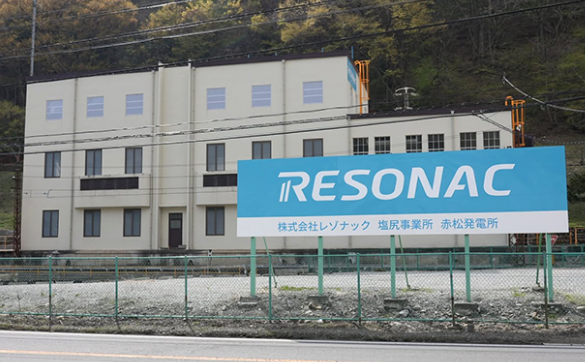
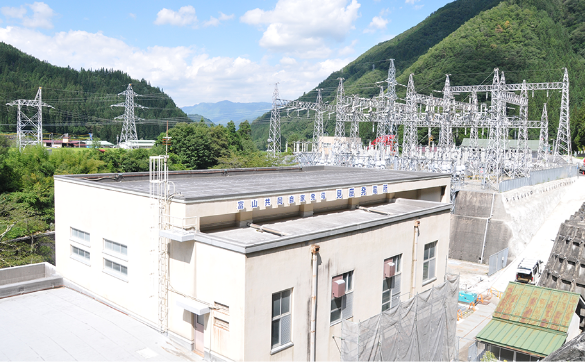
Using hydroelectric power from the Azusa River in the upper reaches of the Shinano River, the Akamatsu Power Station began operating in 1950. It supplies power not only to our plant, but is also widely used by the area’s water utilization projects. Its yearly output is equivalent to the annual power consumption of 5,460 average households.
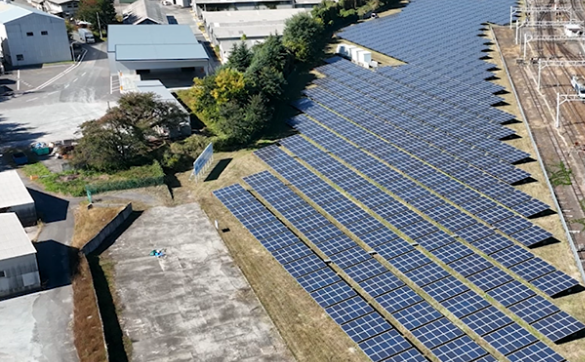
Furthermore, a mega solar power facility covering an area half as large as Tokyo Dome was set up on the plant grounds in 2013, and in addition to generating 180,000 kWh yearly, it also makes a large contribution by decreasing CO₂ by 844 tons per year.
Toyama Plant
The Toyama Plant, which primarily used electrolytic furnaces for manufacturing, required a lot of electricity. In 1954, 11 private companies, led by an electric power company, jointly built and began operating two power plants in Miza and Kuzuyama, Takayama City, Gifu Prefecture, upstream of the Jinzu River (currently funded by four companies). They generate 300,000 MWh yearly, and strive to expand the effective use of sustainable, renewable energy.
Green Space Management and Maintenance
Our company thoroughly complies with the greening rate set forth by the Factory Location Act and promotes further greening. We aim to conserve biodiversity and improve the local environment by increasing the green spaces around our plant. Furthermore, by developing environmental facilities such as the gym, playfield, solar power system, Kikyo Saule Parc (park), we provide venues for community interaction. Through this, we enhance cooperation with the local community and contribute to creating a sustainable environment. We’ll continue to aim for a better future through greening and the use of these facilities.
Wastewater and Exhaust Gas Management
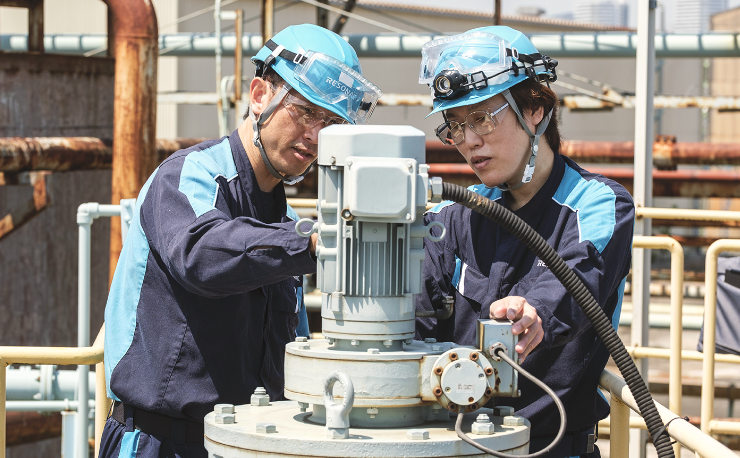
At our company, we think about environmental conservation first, and we’re taking measures to manage the wastewater and exhaust gas from our plant. We’ve set voluntary standards and conduct operation management of our facilities to adhere to environmental regulatory standards. In particular, discharge into public water bodies, including rainwater that falls on factory grounds, is subject to regulations under environmental laws. For that reason, we thoroughly manage the situation through round-the-clock monitoring, daily patrols, and regular equipment inspections. In addition, we regularly have emergency response training so that we can respond quickly in the unlikely event of an emergency, reinforcing our precautions and response system. Through these measures, we adhere to environmental standards and keep our impact on the local environment to a minimum while contributing to the realization of a sustainable society.
Noise Abatement Measures
Since the Shiojiri Plant and Toyama Plant are located near residential areas and equipment operates almost constantly, day and night, throughout the year, we take various measures for noise abatement with a view toward safeguarding the living environment of surrounding residents as well as improving worker efficiency and enhancing their working environment.
The measures broadly fall into preventing noise generation and mitigating and managing noise that is already generated. The former includes soundproofing the equipment and installation sites during the facility design stage, while the latter involves identifying sources and implementing noise reduction measures such as soundproofing panels or buffering materials. Furthermore, fixed-point observations are conducted monthly at multiple boundary areas adjacent to the plant to monitor and confirm compliance with noise regulation limits and agreed values.
Energy Saving Measures
In order to effectively utilize renewable energy, we began constructing and using hydroelectric power plants early on, at the same time as our founding, and worked to secure a stable energy supply source. In 2013, we invited a mega solar facility to be installed on the premises of our Shiojiri factory, and are promoting the efficient securing and use of energy while also taking into consideration the surrounding landscape and environment.
Furthermore, from the facility’s evaluation phase, we repeatedly verify the raw material selection and manufacturing processes through to shipment to minimize environmental load. We prioritize the introduction of Top Runner products and energy-efficient equipment, not only for our manufacturing facilities but also for ancillary equipment like compressors and boilers.
Even in the non-manufacturing divisions, we’ve implemented facility upgrades such as switching to LED lights and introducing energy-saving air conditioners, while simultaneously promoting operational measures such as turning off lights during break time and reducing overtime.
Aluminum Can Recycling Activities
We’ve participated in aluminum can recycling drives since 2001. It’s not just the aluminum cans from beverages purchased on-site, but we also have employees bring used aluminum cans from their own homes to the plants and collect them. The proceeds from selling the collected aluminum cans are donated to local primary schools to purchase classroom equipment and supplies, and have become established as a local activity to revitalize education.
Beautification Activities
We do community clean-up on the roads and green spaces around the plants. Furthermore, under the “Turn the plant into a showroom” catchphrase, we promote initiatives—such as planting trees, managing green spaces on the factory grounds, and developing idle land—to achieve a beautiful plant that is in harmony with the natural environment and blends into the local scenery, thereby fostering community goodwill.
Plastic Recycling Activities
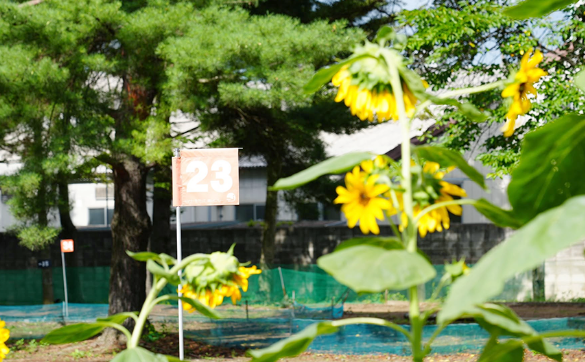
Measures that started with collecting plastic bottle caps expanded to sorting a wide array of plastic products generated during our business activities, such as packing material and equipment, office supplies, plastic pallets, and PVC pipe, and we raised the awareness of recycling separation in all employees working on our premises.
Plastics collected on our premises are further separated into seven categories based on material and shape and then purchased by specialists, with proceeds from the sale being donated in full to the Japanese Red Cross by the buyer so it may serve in their humanitarian aid activities. The effective use of plastic trash also helps to reduce the amount of CO₂ produced when waste is incinerated.